Trucks


Today, electric trucks are already proving essential to winning certain contracts, but how feasible are they and what are the challenges of adoption?
“The benefits of electric trucks are real and will continue to grow,” says Maarten Alta, a researcher and lecturer in sustainable logistics at the University of Applied Sciences in Amsterdam.
Electric trucks are already playing an active role in transforming today’s fleets. And Maarten believes that their potential is significant – provided businesses approach the transition strategically. Price is still one of the biggest challenges, but Maarten says this is mitigated by the enhanced efficiency versus diesel and the possibility to recharge with renewables.
“But there are also operational challenges,” he adds. “Drivers need training, planners must adjust routes based on charging needs, and information systems must be updated. There’s a learning curve.”
How can businesses adopt electric trucks in a way that’s efficient and fits their organisation? “Most transport providers are starting with just one or two electric trucks in their fleet,” says Maarten. “They’re learning how to drive them efficiently, how to plan routes, and how to work with the charging infrastructure. It’s a gradual shift, but one with major long-term rewards.”
One of the most critical early steps is selecting the right customers and routes to go electric. “It’s all about mission fit,” Maarten explains. “You need to look at whether your client demands zero-emission deliveries or if it helps win new business. In city logistics or construction, electric trucks can be a real differentiator – in fact, electric trucks are order winners in many sectors.
“In construction, for example, you often need to bring heavy machinery into city centres,” he explains. “If you’re using electric trucks, you’re more likely to win those contracts – especially in low-emission zones.”

Planning an electric truck in your fleet
From a logistics planning perspective, switching to electric trucks is about much more than just simply replacing the vehicle. It requires integration across the entire system. “The network design, planning and control, information systems and personnel all need to be aligned,” Maarten says. “Planners need access to real-time data about the truck’s state of charge, charging costs and even the driver’s fuel economy.”
That’s why he believes a new role within logistics operations will emerge – that of the energy officer. “Energy is becoming a major cost factor in TCO (total cost of ownership) calculations,” he says. “An energy officer can optimise when and where trucks are charged.” As well as this, the energy officer can influence the energy price by using smart solutions that drive costs down, such as deploying solar panels for energy capture to charge trucks.
“The planners can also influence costs and emissions greatly by charging at the right moment,” he adds. “There is a correlation between costs and emissions. Between 12pm and 3pm, for example, when the sun is shining, energy prices are low and emissions (due to the powering of the energy grid) are too.”
Electric trucks are one of the most powerful tools we have today. Those who adapt early will gain a strategic advantage
In fact, in congested energy markets like the Netherlands, the electricity grid is itself becoming a constraint. “Companies are already facing multi-year wait times to upgrade their electricity contracts,” he explains. “That’s why energy planning is now just as important as route planning.”
“Some companies are forming energy hubs – sharing energy with neighbors, using solar panels or installing stationary batteries,” adds Maarten. “Timing your charging to match renewable availability helps.”
Despite these challenges, Maarten says electric trucks are already viable in specific areas. “In the Netherlands, we’re seeing vans and light trucks that are already competitive with diesel.”


Long-haul electric trucks
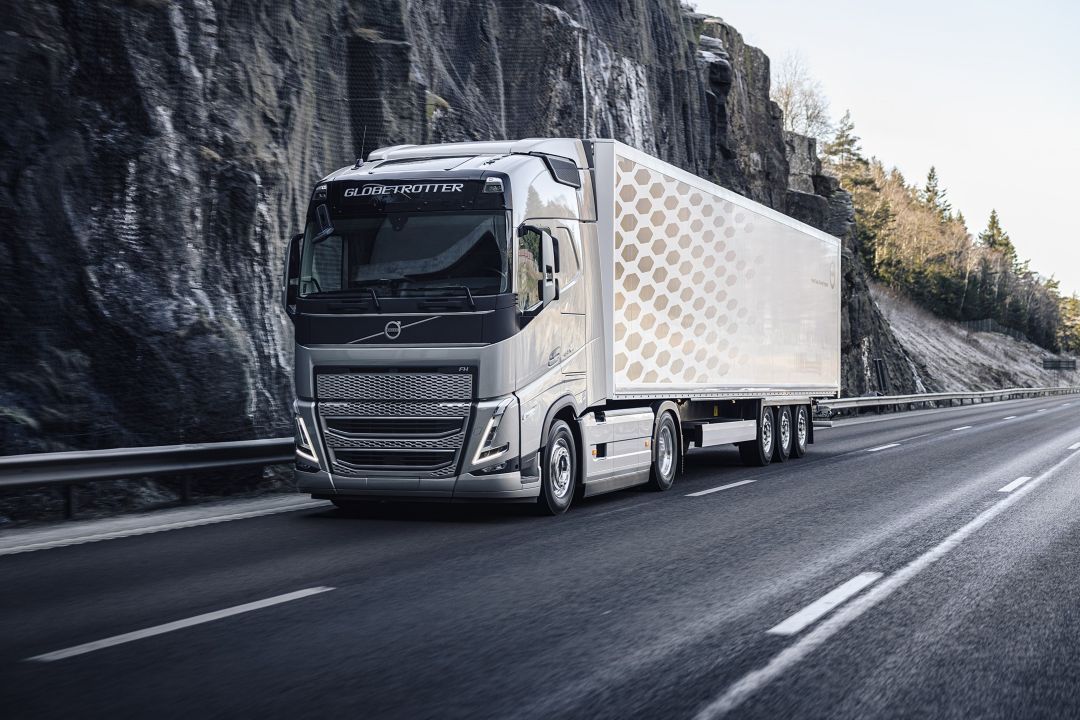
“New models like Volvo’s 600 km-range truck are game-changers,” adds Maarten. “That range is enough for a large percentage of routes. It will depend on each company’s strategy and TCO analysis, but the range barrier is being overcome.”
Government support is also helping to ease the transition. “There are subsidies available – not just nationally, but also from local provinces or municipalities,” he notes. “On top of that, distance-based road charges are starting to favor electric trucks.”
The impact of electrification goes beyond cost savings and emissions. “It changes how fleets operate,” Maarten adds. “It creates new roles (such as energy officers), new responsibilities and new systems. But those who adapt early will gain a strategic advantage.”
His advice to fleet operators is simple: start now. “Talk to your energy provider. Assess whether you have enough power capacity. Train your planners. Talk to your customers. Once you overcome the initial hurdles, the benefits will start to build.”
With growing pressure on supply chains to decarbonise, electric trucks offer a practical, scalable way to reduce emissions without compromising service.
“Sustainability is becoming a requirement,” Maarten says. “And electric trucks are not just part of the solution, they’re one of the most powerful tools we have today.”
Find out more about Volvo’s electric truck range here.
Name: Maarten Alta
Job: Lecturer - sustainable logistics
Company: University of Applied Sciences
Location: Amsterdam, Netherlands