
Trucks


Today, more than ever before, truck driving offers plenty of opportunities to build a successful career. It is increasingly an occupation that requires a broad range of skills, and many of the previous stereotypes associated with the job are becoming obsolete.
Tatu Ljokkoi started driving trucks around 20 years ago and is now a Driver Development Manager at Volvo Trucks. In just two decades he has overseen significant changes in the demands and expectations placed on modern-day truck drivers.
“There is more appreciation for skilled drivers in the industry now,” says Tatu. “There is a bigger need for drivers to specialise and upskill, and for them, this opens up new opportunities for career development and progression.”
Among the biggest changes Tatu highlights the implementation of new technologies and digitalisation, such as GPS navigation, fleet management systems and other types of software. At the same time, advances in truck technology and loading equipment have removed a lot of the physical strain required to do the job, making the occupation more accessible.
“For most truck drivers these days, at least one third of their working hours involve tasks other than driving,” says Tatu. “It could be unloading goods, operating equipment, or interacting with customers. For drivers, this means that they often need to be proficient in new technologies and digital tools, be good at problem solving and have good people skills. These are aspects of the job that people outside of the industry don’t see.”
Many specialised roles can be hard to fill, which creates
opportunities for drivers to secure good salaries and excellent job
security.
Common myths and misconceptions about truck driving
Despite all the changes in the trucking industry, many of the old stereotypes about the occupation persist. Tatu Ljokkoi debunks some of the biggest misconceptions:
-
“Truck driving is a low paid job that offers no job security”
“Again, those that really excel in this industry are those that can acquire new skills and take on highly specialised roles. For example, a driver who can perform basic vehicle repairs, like changing a leaking hydraulic hose, can be incredibly valuable for a business that operates in remote areas as it saves them downtime and maximises productivity. Many specialised roles can be hard to fill, which creates opportunities for drivers to secure good salaries and excellent job security.”
 Good people's skills and social interaction are increasingly important for modern-day truck drivers.
 -
“Truck drivers have poor work-life balance”
“These days drivers have more choice in terms of work shifts and finding a schedule that best fits their lifestyle. Increasingly transport companies are operating trucks out of the same depot, so the driver leaves and returns to the same place in one shift and can return home every night. Not only does this make it easier to find drivers, but it also increases the utilization of the truck.
“There are still long-haul shifts around, where a driver can be away for long periods, but then they are compensated with time off. For example, being away for four days and then getting four days off. And for some drivers, this actually suits them and gives them an even better work-life balance.
“There are different options available, and if you’re a well-established driver with a good reputation, it becomes easier to find a work schedule that provides you with the optimal balance.”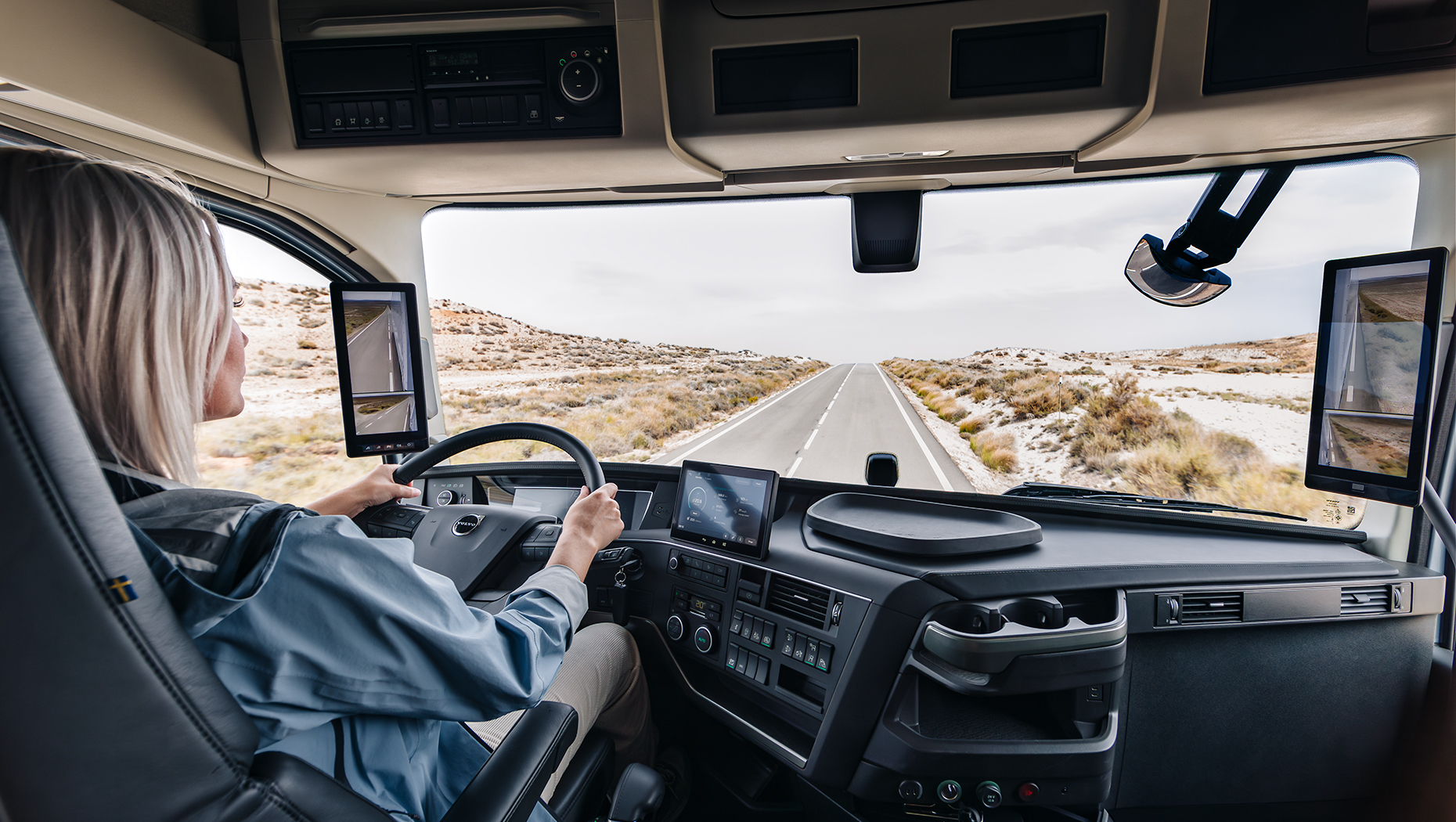 Truck cabs are increasingly high-tech workspaces, with drivers needing to be proficient with a range of digital tools.
If you would like to learn more about what it is like to be a truck driver, you might be interested in reading:
- What is the most scenic road for truck driving?
- Truck stop food around the world
- How women can become truck drivers – and why
- How technology contributes to efficient driving


